Table of Contents
Introduction
The Black Rhinoceros (Diceros bicornis) is one of Africa’s most iconic yet imperiled species powerful, elusive, and deeply misunderstood. Once roaming across vast regions of sub-Saharan Africa, black rhino populations collapsed due to aggressive poaching, habitat fragmentation, and illegal wildlife trafficking. Today, the species stands as a powerful symbol of both ecological vulnerability and conservation resilience with Agasaro Safaris.
Top Black Rhinoceros Facts & conservation-2026/2027
Black Rhinoceros Facts & Conservation — 9 Essential Things to Know (2025)
1. What Is the Black Rhinoceros?
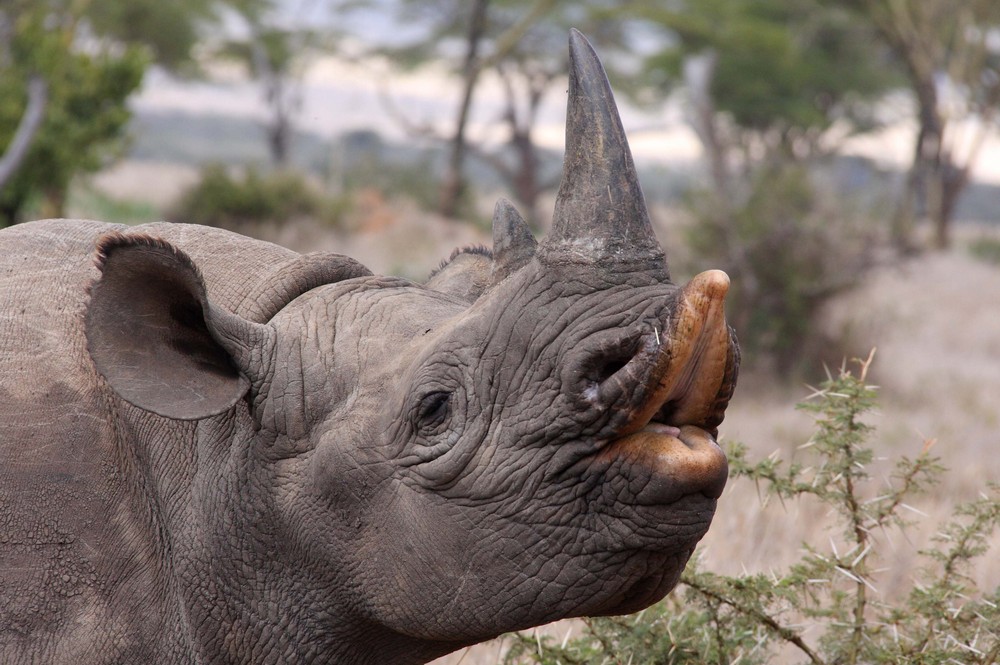
The Black Rhinoceros is a large African herbivore known for its prehensile (hooked) upper lip, which it uses to grasp leaves, branches, and fruit. It is a browser not a grazer and features two keratin horns, exceptional strength, and a solitary lifestyle.
The species is currently classified as Critically Endangered under international conservation listings, making it one of Africa’s highest-priority mammals for protection.
2. Why Is the Black Rhino Called “Black” When It’s Actually Grey?
The Black Rhino is not black at all. Its skin ranges from grey to brown depending on mud, dust, and habitat. The name stuck due to early European misinterpretations and to differentiate it from the White Rhino, whose name comes from the Dutch word “wijd,” meaning wide, referring to its broad mouth.
3. Physical Features: Size, Weight, Speed & Horn Structure
Black Rhinos weigh 800–1,350 kg, stand 1.3–1.7 meters tall at the shoulder, and feature two keratin horns, with the front horn typically longer. Despite their bulk, they can reach 50–55 km/h, making them incredibly fast over short distances.
Ecological importance of horns
Their horns serve multiple roles:
- defense from predators
- dominance displays
- protection of calves
- foraging and breaking branches
4. Diet & Feeding Behavior : The Hooked Lip Advantage
Black Rhinos are strict browsers, feeding on leaves, shoots, herbs, shrubs, and fruit. Their prehensile lip works like a flexible finger, allowing them to pluck food with precision.
Their diet shapes ecosystems by:
- Preventing shrub overgrowth
- Opening pathways for smaller herbivores
- Encouraging vegetation diversity
This is why they’re considered ecosystem engineers.
5. Life Cycle, Gestation & Reproduction Facts
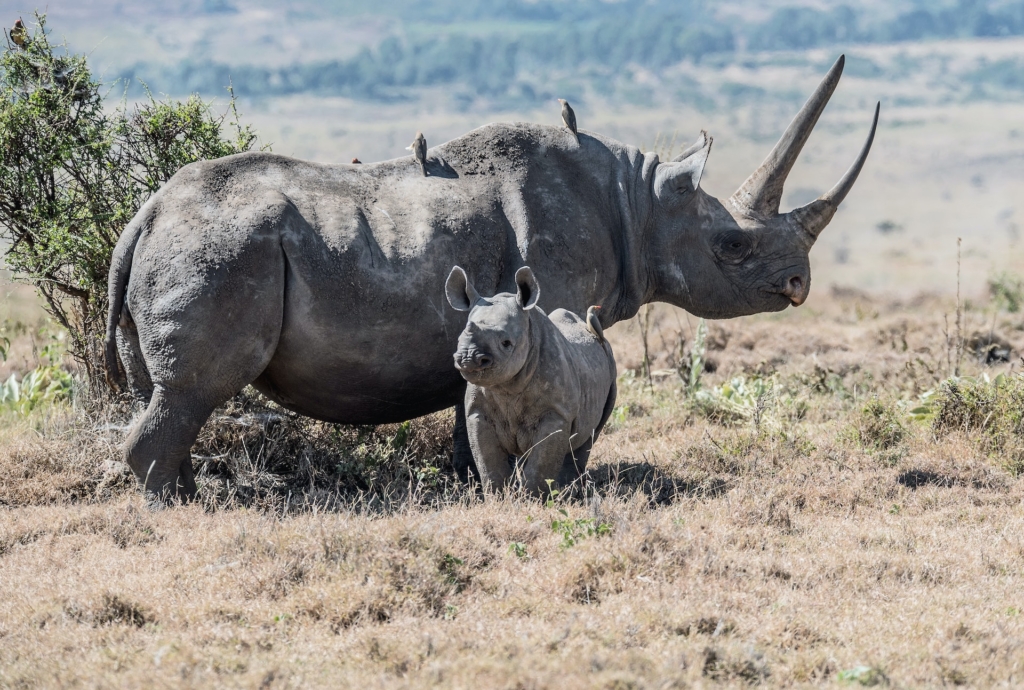
Black Rhinos have one of the slowest reproductive cycles of any African mammal. Females give birth to a single calf every 2.5–4 years after a long 15–16-month gestation.

Key facts
- Calves stay with their mothers for up to 3 years.
- Males reach maturity around 7–8 years.
- Females usually mature slightly earlier.
This slow reproduction makes population recovery extremely challenging, especially after poaching events.
6. Population Status & Distribution (2025-2026 Update)
Black Rhino numbers dropped by over 96% between the 1960s and 1990s. Although thousands were lost, intensive conservation has led to small but significant rebounds.
Current estimates
Wild populations sit in the low-to-mid thousands across:
- Namibia
- Kenya
- Tanzania
- South Africa
- Zimbabwe
Their future depends entirely on continued protection and habitat expansion.
7. Main Threats Facing the Black Rhinoceros
The top threats include:
- Poaching for rhino horn (driven by illegal markets)
- Habitat loss due to human expansion
- Genetic fragmentation from isolated populations
- Low birth rates limit recovery.
Poaching remains the most severe threat because rhino horn is highly valued on the black market.
8. Conservation Efforts That Are Working
Several successful initiatives have helped increase Black Rhino numbers, including:
- Intensive anti-poaching patrols
- Use of drones and thermal surveillance
- Translocation to safer habitats
- Community wildlife conservancies
- Demand-reduction campaigns in end-user countries
These strategies have enabled steady, measurable recovery in parts of southern and eastern Africa.
9. How People Around the World Can Help Save Black Rhinos
You can support conservation by:
- Donating to accredited rhino conservation programs
- Choosing ethical safari operators
- Supporting community-based tourism
- Raising awareness about wildlife crime
- Advocating for strong anti-poaching policies
Your choices from tourism to online advocacy—help shape the future of this species.
Related Blog Article: Akagera Safari: Black Rhino & Big Five in Rwanda
Quick Summary: 9 Fascinating Black Rhino Facts
- They are grey, not black.
- They have a hooked lip for browsing.
- They can run up to 55 km/h.
- They have two keratin horns.
- They weigh up to 1.3 tonnes.
- Gestation lasts 15–16 months.
- They are solitary and territorial.
- The population is slowly recovering.
- Conservation efforts are working but fragile.
Where to See Black Rhinos in East Africa (Best Parks & Conservancies)
Black rhinos in East Africa are protected in a handful of tightly guarded parks and private conservancies. Below are the most reliable places to see them, with a short description of what makes each site special and where to go to book.
Kenya: The best chance in East Africa
Kenya holds the largest share of East Africa’s black rhino population and is the region’s top destination for reliable sightings. WWF
Ol Pejeta Conservancy (Laikipia): East Africa’s largest black-rhino sanctuary
Ol Pejeta is widely recognised as the largest and most accessible black-rhino stronghold in East Africa, with a large, carefully protected population and visitor programs (including guided rhino tracking). This is a top pick for close, ethical viewing.
Lewa & Laikipia Conservancies: Community-backed protection + great tracking
Private conservancies on the Laikipia Plateau (Lewa, Loisaba, Borana, Kicheche and others) run world-class rhino protection programs and are excellent for rhino tracking and conservation-focused safaris. Many conservancies welcome guests for guided rhino experiences.
Solio Game Reserve: Kenya’s first private rhino sanctuary
Solio is a long-standing, high-security rhino sanctuary (pioneer in private rhino protection) and offers reliable rhino sightings in a compact area. soliogamereserve.org
Ngulia Rhino Sanctuary (Tsavo West): Classic rhino stronghold
Ngulia in Tsavo West was established as a fenced stronghold to rebuild rhino numbers and remains an important, visitor-accessible site for black rhino viewing in southern Kenya. Tsavo Trust
Nairobi National Park: city-edge rhino ark
For a quick, reliable sighting near Nairobi, the park’s rhino protection work has made Nairobi National Park a convenient place to see black rhinos, often combined with arrivals/departures in Nairobi. Condé Nast Traveller
Tanzania: Protected sanctuaries and crater populations
Mkomazi National Park & Mkomazi Rhino Sanctuary : Tanzania’s premier black-rhino sanctuary
Mkomazi hosts a dedicated, well-guarded rhino sanctuary focused on breeding and recovery of the Eastern black rhino subspecies; visitors can arrange sanctuary visits as part of conservation-minded safaris. Mkomazi is one of Tanzania’s most important rhino recovery sites.
Ngorongoro Conservation Area / Crater : iconic crater + rare rhino sightings
Ngorongoro is one of the few Tanzanian ecosystems that still supports black rhinos. Sightings are rare and special — best attempted with experienced guides and early planning. Ngorongoro Crater Tanzania
Where you won’t reliably see wild black rhinos in East Africa
- Uganda currently has rhino conservation programs (Ziwa Rhino Sanctuary) focused on white rhinos; black rhinos are not present in the wild in Uganda at this time. If you want rhino experiences in Uganda, Ziwa is the place for white rhinos.
Responsible viewing tips (short)
- Always visit with accredited operators and trained rangers never attempt independent tracking.
- Book conservancy-led rhino tracking or sanctuary visits that directly support protection and community conservation.
- Keep a safe viewing distance and follow the ranger’s instructions, black rhinos are powerful and unpredictable.
Quick summary — best picks at a glance
- Top reliability (Kenya): Ol Pejeta, Lewa, Solio, Ngulia, Nairobi NP. Ol Pejeta Conservancy
- Top in Tanzania: Mkomazi Rhino Sanctuary and Ngorongoro Conservation Area.
- Uganda: no wild black rhinos — Ziwa Rhino Sanctuary hosts white rhinos only. Uganda Wildlife Authority
Book a Black Rhino Safari with Agasaro Safaris
Ready to plan a responsible black-rhino experience in East Africa? Agasaro Safaris arranges expert-led trips to the conservancies and parks above, including:
- Private rhino-tracking drives at Ol Pejeta and Lewa
- Sanctuary visits at Mkomazi (Tanzania) and Ngulia (Tsavo West)
- Combined itineraries (e.g., Laikipia → Amboseli / Ngorongoro) tailored for conservation-minded travellers
Visit www.agasarosafaris.com or message us directly to design your ethical black-rhino safari — small groups, expert guides, and every booking supports on-the-ground protection.
FAQ’s
How many Black Rhinos are left in the world?
Estimates place the population in the low-to-mid thousands, depending on the country and survey method. Numbers are gradually increasing.
Are Black Rhinos dangerous?
Yes. They are highly defensive and may charge if startled. Responsible viewing requires trained guides and safe distances.
What is the lifespan of a Black Rhino?
They typically live 30–40 years in the wild, slightly longer in well-managed reserves.
What do Black Rhinos eat?
They are browsers feeding on leaves, twigs, herbs, shrubs, and fruit.
Why are Black Rhinos endangered?
Poaching for the illegal horn trade and habitat loss are the primary reasons.
Where can tourists see Black Rhinos?
Major sightings occur in Namibia, Kenya, Tanzania, South Africa, and Zimbabwe under strict protection.
Can Black Rhino numbers recover?
Yes. Conservation programs have proven effective, but recovery is slow due to low birth rates and persistent poaching pressure.